One capsule daily 347 mg of actives per capsule Refrigerate for optimal quality
Support areas

SodaTide Benefits

Seven benefit areas, each framed responsibly and each measured against what the product label actually declares — followed by a plain list of what this product does not do.

Read this first

How to read every benefit on this page

Each one below is framed as support, because that is what the evidence and the law both permit for a dietary supplement. None of them is a promise.

SodaTide is not a treatment for obesity, diabetes, IBS or any other condition, it is not intended to diagnose, treat, cure or prevent any disease, and it is not a weight-loss guarantee. Individual results may vary.

A woman resting comfortably at home with a hand on her midsection
01

SodaTide Digestive Wellness Support

The most directly supportable benefit on the list, and the one to lead with.

Prebiotic fibre feeds the bacteria in your colon, and live probiotic strains add to the population directly. Fibre and live cultures are the two levers most used for regularity and digestive comfort, and there is a substantial body of research behind both categories.

Set expectations honestly, though. The first week of any prebiotic fibre commonly brings gas or bloating while gut bacteria adjust. It usually settles.

And the amounts are small: 311 mg of combined fibre, against research conducted in grams per day. The probiotic side is a different proposition — live organisms can matter at small weights — but with no CFU count published, that cannot be assessed either.

  • Prebiotic fibre plus three live strains
  • Gas in the first week is normal and usually settles
  • 311 mg of fibre against gram-scale research
  • No CFU count published for the probiotic side

What the label supports

  • Chicory Root Inulin211 mg — trials use 5–10 g a day
  • Potato Resistant Starch100 mg — trials use 15–30 g a day
  • Probiotic Blend36 mg — no CFU count published
  • Total actives347 mg in one daily capsule
  • Finished-product trialsNone published
02

SodaTide Metabolic Wellness Support

The headline benefit, and the one that needs the most careful framing — because the seller's own wording goes a long way past what the evidence carries.

What genuinely supports it: short-chain fatty acids produced by fibre fermentation are studied in connection with GLP-1 and PYY, hormones involved in fullness and glucose handling. Akkermansia muciniphila is one of the most actively researched organisms in metabolic health. These are real research areas.

What does not follow: that a 347 mg capsule reproduces those findings. The fibre research was conducted at 5–30 grams a day, and the Akkermansia research uses defined organism counts this product does not publish.

SodaTide is not a weight-loss treatment and not a treatment for any metabolic condition. Descriptions of a formula that attacks bacteria or turns the gut into a fat-burning machine are not supported and are not repeated here. Weight depends on diet, activity, sleep and health factors no capsule controls.

  • Short-chain fatty acids and satiety hormones are real research
  • Akkermansia is genuinely well studied
  • Trial doses are 15–100× larger
  • Not a weight-loss treatment or guarantee
Fresh vegetables and fruit alongside a prepared salad
03

SodaTide Prebiotic Fibre Support

Of everything on this page, this is the claim with the least distance between what is said and what is known.

Inulin is close to the textbook definition of a prebiotic: it selectively promotes Bifidobacteria in the colon, demonstrated repeatedly in controlled human studies. Resistant starch is a particularly good butyrate producer. Both are genuinely well-chosen ingredients.

Pairing them is the smartest thing about this formula. Inulin ferments early and briskly; resistant starch ferments later and further along the colon. Spreading the feeding across the length of the gut rather than concentrating it in one place is a real formulation decision, not a marketing line.

The limitation is arithmetic, not chemistry. 311 mg of combined fibre is a fraction of what any of the underlying research used, and roughly a fortieth of what a cup of beans supplies.

  • Inulin is one of the best-evidenced prebiotics
  • Resistant starch is a strong butyrate producer
  • Two fermentation rates is a genuine design choice
  • 311 mg is a fraction of a studied dose
A hand declining a plate of pancakes, illustrating appetite regulation
04

SodaTide Appetite and Satiety Support

Framed correctly, this is about fullness signalling rather than chemical appetite suppression. There is no appetite suppressant in this formula, and that distinction is worth respecting.

The mechanism has two parts. Fibre physically slows gastric emptying, and the short-chain fatty acids from its fermentation are linked with satiety hormone release. Both are documented.

The complication is that both parts scale with volume. Fibre creates fullness partly by being bulky, and 311 mg occupies almost no space. A bowl of oats or a serving of beans does far more on this specific mechanism than a capsule can.

Used as a small daily addition alongside a fibre-containing diet, the logic holds. Used as a replacement for dietary fibre, it does not.

  • Supports fullness rather than suppressing appetite
  • Two documented mechanisms behind it
  • Both scale with the amount of fibre
  • A complement to dietary fibre, not a substitute
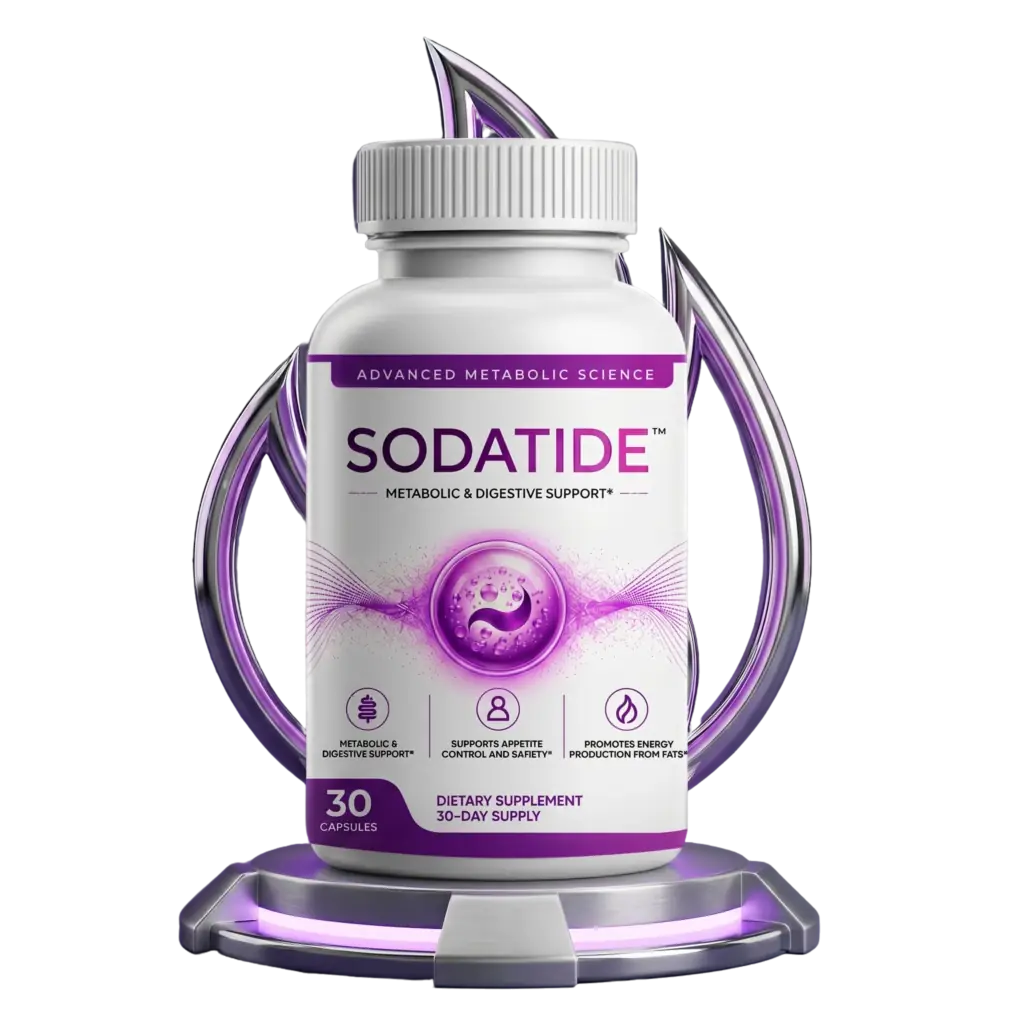
A single bottle of SodaTide showing the 30-capsule count
05

SodaTide Probiotic Support

The most interesting part of the formula, and the least assessable.

The three strains are well chosen and coherent with the fibres. Clostridium butyricum produces butyrate, which is exactly what the fibre fermentation is aiming at. Akkermansia muciniphila lives in the gut's mucus layer and is studied for barrier integrity. Bifidobacterium infantis has reasonable evidence behind certain strains in IBS.

Naming all three on the label is better disclosure than most blends manage — and better than the seller's own page, which names only one.

But no CFU count is published anywhere, and 36 mg is a weight, not an organism count. Nor are strain designations given, and probiotic effects are strain-specific. So the strains can be described, and the dose cannot be judged.

  • Three strains, all named on the label
  • Coherent pairing with the two fibres
  • No CFU count published anywhere
  • No strain designations either

Claims not carried forward here

  • Attacks harmful bacteriaUnsupported for 347 mg
  • Fat-burning machineUnsupported
  • Detoxify the bodyNot a measurable claim
  • 100% natural formulaThe label lists manufactured excipients
  • 4.9/5 from 3,962 buyersNo platform named or linked
06

SodaTide as a Stimulant-Free Daily Routine

This one is straightforwardly true, and it deserves saying plainly.

There is no caffeine in SodaTide, and no thermogenic ingredient. The entire formula is 211 mg of chicory fibre, 100 mg of potato starch and 36 mg of bacteria. Whatever else is true of it, it will not give you jitters, disturb your sleep or produce an afternoon crash.

That matters for anyone who avoids stimulants for a heart rhythm issue, anxiety, or on medical advice. And one capsule a day with water is about as low-friction as a routine gets — which counts, because adherence is what decides whether anything happens.

The trade-off follows honestly: nothing here produces a same-day effect you would notice. A stimulant works in thirty minutes; fermentable fibre works over weeks, if it works at all at this amount.

  • No caffeine, no thermogenics, no diuretics
  • No jitters, no sleep disruption, no crash
  • One capsule a day, nothing to measure
  • Also means no same-day noticeable effect
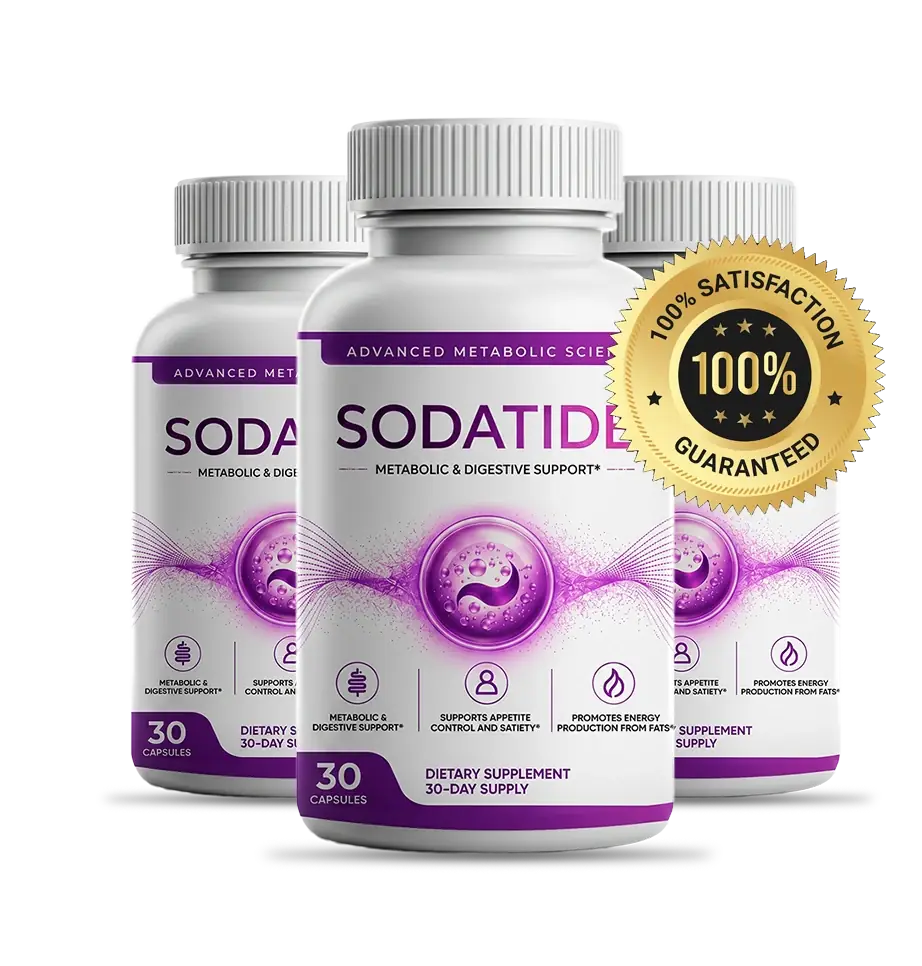
SodaTide bottles with the satisfaction guarantee seal
07

What a SodaTide Buyer Actually Gets

Pulling the six together, without the marketing layer.

You get a convenient once-daily vegetarian capsule containing 211 mg of chicory root inulin, 100 mg of potato resistant starch and 36 mg of a three-strain probiotic blend, with all three strains named on the label. The ingredient choices are sensible, the pairing of two differently-fermenting fibres shows real thought, and there are no stimulants.

What you do not get is fibre at a researched amount. That is not concealed on the bottle — though the sales page does not mention it — and it follows from the format. A capsule this size cannot hold five grams of inulin.

The fair conclusion: as a small daily probiotic-and-prebiotic habit alongside a fibre-containing diet, this is a reasonable product to consider. As a substitute for dietary fibre, or as a weight-loss intervention, or as an alternative to medical treatment, the label does not support it.

  • 347 mg of actives, three strains named
  • Sensible choices, small amounts
  • A complement to diet, not a replacement
  • Protect the refund window either way
The other side

What SodaTide Does Not Do

A benefits page listing only benefits is an advertisement.

  • It does not burn fat. No published evidence supports fat-burning for 347 mg of fibre and bacteria, whatever the sales copy says.
  • It does not guarantee weight loss. Weight depends on diet, activity, sleep, medication and health factors no capsule controls.
  • It does not treat obesity, diabetes, IBS or inflammatory bowel disease. These are medical matters.
  • It is not an alternative to prescription treatment. The two have never been compared in any trial and are not in the same category.
  • It does not “detoxify” anything. That is not a measurable claim.
  • It does not deliver a researched dose of fibre. 311 mg against gram-scale research settles that.
  • It does not tell you how many live organisms you get. No CFU count is published anywhere.
  • It does not replace dietary fibre. A serving of beans supplies roughly forty times more.
  • It has not been trialled as a finished formula.
  • It does not replace a doctor's visit if you have persistent digestive symptoms. Some of those need investigating.

What SodaTide is not for

SodaTide is a dietary supplement, not a treatment for any medical condition. It is not a treatment for obesity, diabetes, irritable bowel syndrome, inflammatory bowel disease or any other condition, and it is not intended to diagnose, treat, cure or prevent any disease.

Some symptoms need a doctor rather than a supplement, and this is worth being specific about. Sudden or unexplained weight loss, persistent abdominal pain, blood in the stool, a lasting change in bowel habit, or difficulty swallowing all need clinical assessment. So does persistent fatigue, which has causes a blood test can find — anaemia, thyroid disease, coeliac disease, diabetes and sleep apnoea among them.

A prebiotic capsule cannot distinguish between ordinary bloating and something that needs investigating. A doctor can.

One SodaTide comparison worth treating carefully

The seller's page runs a comparison table setting the product against “Injectables & Rx Plans”, marking prescription options with crosses for side effects, rebound weight and no refund, and noting that they require injections and office visits. The body copy adds that prescription weight-loss options “often involve side effects and ongoing medical visits” and are difficult to maintain.

Some of that is factually unremarkable — a capsule is obviously easier than an injection. But the framing invites a comparison that should not be made.

Prescription weight-loss medicines and a 347 mg fibre-and-probiotic capsule are not alternatives to one another. They are not in the same category, they have not been compared in any trial, and one has regulatory approval and clinical evidence behind it while the other has neither.

Never stop, delay or replace a prescribed treatment on the strength of a supplement page. That applies with particular force to anyone managing type 2 diabetes, where medication changes belong to a doctor and nobody else. If you are weighing up prescription options, that is a conversation with a clinician who knows your history — not a decision to be made from a sales table.

Reading the Evidence Behind SodaTide Benefits

The SodaTide amounts the sales page never gives

The seller's page names three ingredients and describes a three-strain probiotic blend. It publishes no amount for any of them, anywhere — no milligrams, no CFU count — and it names only one of the three strains.

The product label publishes nearly all of it. The Supplement Facts panel on the bottle carries the milligram amounts and names all three strains. Read directly from the label:

IngredientPer capsuleCommonly studied at
Chicory Root Inulin211 mg 5,000–10,000 mg a day in prebiotic trials
Potato Resistant Starch100 mg 15,000–30,000 mg a day in most studies
Probiotic Blend36 mg Measured in CFU, not milligrams — no CFU published
Total active material347 mg One capsule, once daily

The three strains, also named in full on the label: Bifidobacterium infantis, Clostridium butyricum and Akkermansia muciniphila. The sales page names only the third.

Why this matters. Without amounts, a named ingredient list cannot be checked against anything. With them, the comparison is simple arithmetic: 211 mg of inulin is roughly one twenty-fifth to one fiftieth of a studied prebiotic dose, and 100 mg of resistant starch is roughly one hundred-and- fiftieth to one three-hundredth of one.

That is not concealment — the numbers are printed on the bottle, and anyone can read them. It is a physical constraint: fibre is bulky, and a single small capsule cannot hold a gram-scale dose of it. Anyone eating a bowl of oats, a pear or a serving of beans takes in several grams of fermentable fibre. It is the fact that matters most when judging what one capsule a day can realistically do.

No CFU count is published for the SodaTide probiotic blend

The label declares the probiotic blend by weight — 36 mg. That is the one figure on the panel that cannot be interpreted.

Probiotics are dosed in colony forming units, not milligrams. A CFU count measures how many live organisms you actually swallow. A weight tells you how much powder is in the capsule, and that powder is mostly carrier material. Two products both declaring 36 mg could differ by several orders of magnitude in live organisms, and nothing published distinguishes them.

Typical probiotic research uses doses in the region of one to fifty billion CFU a day, and trials report the figure because it is the variable that matters.

What this means practically: the strains are named, which is better than most blends manage, but the amount of live culture cannot be established from any published source. That is a fair question to put to the seller before ordering six months' worth.

How to read the research behind SodaTide

The ingredient categories here are genuinely researched. Inulin is one of the best-characterised prebiotics there is; resistant starch has reasonable evidence for insulin sensitivity; and Akkermansia muciniphila is among the most actively studied organisms in metabolic research.

Two things follow that the seller's page does not say. That research concerns the ingredient categories, not this finished product, which has never been through a clinical trial of its own. And the research was conducted at grams per day of fibre, against 347 mg of total active material here.

The research explains why these ingredients are interesting. It does not show that this capsule reproduces the results.

What SodaTide cannot do on its own

There is an unusually direct comparison available for this product, and it would be dishonest to leave it out.

Most adults eat far less fibre than recommended. Common guidance is somewhere around 25–38 grams a day depending on age and sex, and typical intake in many countries is roughly half that. That shortfall is the single biggest lever on exactly the things this product is sold for: digestion, regularity, satiety and post-meal blood sugar.

For scale: a cup of cooked beans or lentils supplies somewhere in the region of 12–15 grams of fibre. A pear with the skin on, around 5 grams. A bowl of oats, roughly 4 grams. A cooled cooked potato — the very source this product's resistant starch comes from — supplies resistant starch in grams.

Against those figures, 311 mg of combined fibre is a rounding error. That is not an argument that the capsule is worthless; a probiotic dose is a different proposition from a fibre dose. It is an argument that no capsule substitutes for food, and that anyone buying this for digestive benefit will get far more from adding beans, oats, fruit and vegetables than from anything in a 347 mg capsule.

Sleep, movement and total diet do the heavy lifting.

Packages

SodaTide Pricing Options

The three bundles the seller lists, with one printed figure corrected and the correction explained.

Basic offer
SodaTide 2 bottle bundle, 30 vegetarian capsules per bottle

Two Bottles

60-day supply · 60 capsules
$79per bottle

$358$158 total

Seller states a saving of $200

The seller prints the struck price here as $179. Its own regular rate is $179 per bottle, and only $358 gives the $200 saving it claims — see the note below.

  • 2 bottles, 30 capsules each
  • A US shipping fee is added at checkout
  • 60-day money-back guarantee
  • No bonus guides at this tier
Order SodaTide
Lowest per bottle · $49 Lowest per bottle
SodaTide 6 bottle bundle, 30 vegetarian capsules per bottle

Six Bottles

180-day supply · 180 capsules
$49per bottle

$1074$294 total

Seller states a saving of $780

  • 6 bottles, 30 capsules each
  • Free US shipping
  • 60-day money-back guarantee
  • 6 digital bonus guides
Order SodaTide
Free US shipping Good value
SodaTide 3 bottle bundle, 30 vegetarian capsules per bottle

Three Bottles

90-day supply · 90 capsules
$69per bottle

$537$207 total

Seller states a saving of $330

  • 3 bottles, 30 capsules each
  • Free US shipping
  • 60-day money-back guarantee
  • 6 digital bonus guides
Order SodaTide

About that two-bottle figure. The seller's page shows the two-bottle tier as a struck $179 reduced to $158, while also claiming a $200 saving. Those two numbers cannot both be right: $179 minus $158 is $21. The intended figure is $358 — the page's own regular rate is $179 per bottle, and $358 minus $158 is exactly the $200 claimed. The other two tiers confirm the pattern and reconcile perfectly ($179×3 = $537 struck, less $207, saves $330; $179×6 = $1074 struck, less $294, saves $780). $358 is shown above rather than the printed $179, because repeating the printed figure would pass on an error. Free US shipping applies to the three- and six-bottle bundles only; the two-bottle bundle adds a shipping fee at checkout and is the only tier without the six digital bonuses. These are current listed offers rather than permanent prices, and the official checkout is the only authoritative source.

SodaTide bottles with the satisfaction guarantee seal
Returns

The SodaTide 60-Day Money-Back Guarantee

The seller states a 60-day satisfaction guarantee from the date of purchase and describes it as unconditional. It also states the purchase is one-time with no automatic renewals or auto-billing, which is a genuine point in its favour.

The condition that changes how the SodaTide guarantee works

The same page says twice that a refund follows “at least 30 days of use”. Read together with the 60-day limit, the practical window to request a refund is days 30 to 60 — about 30 days wide, not 60.

That is not unreasonable for a product whose own rationale is that microbiome change takes weeks. But “unconditional” is not quite the right word for a guarantee with a stated precondition, and the gap is easy to miss.

Only the two-bottle bundle is a 60-day supply and fits inside the guarantee at all. The three-bottle bundle runs 90 days and the six-bottle bundle 180 days — three times longer than the window.

Put day 30 and day 60 in your calendar the day you order. The stated refund contact is [email protected]. Two things the published terms do not settle: who pays return postage, and whether opened bottles are accepted.

Before you decide

Considering SodaTide?

Read the ingredients page first. This site publishes the per-capsule amounts and all three probiotic strain names, read directly from the product label — none of which appears on the seller's page at all. They are the numbers that should shape the decision.

From $49 per bottle · 60-day money-back guarantee · One capsule a day

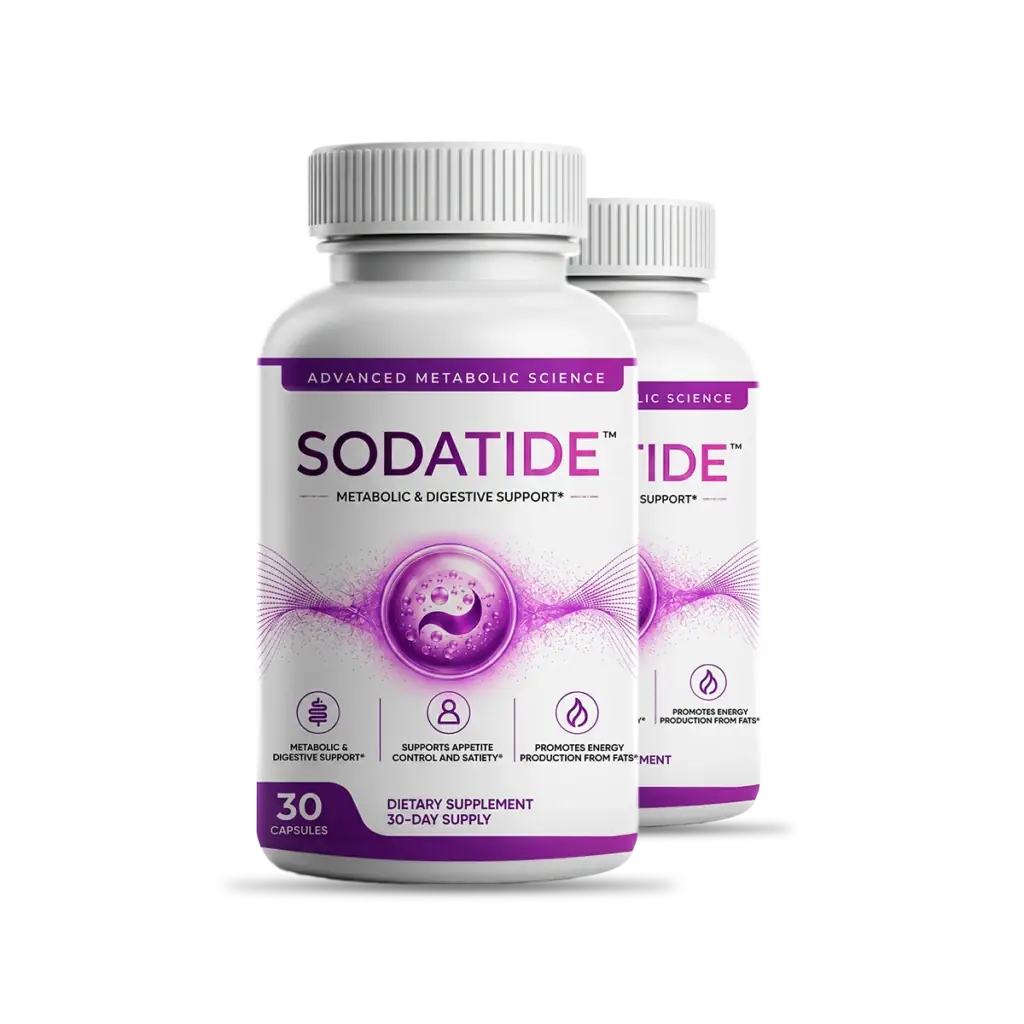
SodaTide six-bottle bundle of digestive and metabolic support capsules