Chicory Root Inulin
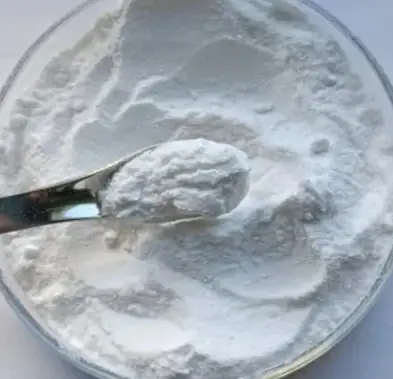
Cichorium intybus (root) 211 mg per capsuleThe largest single component of the capsule, and one of the best-characterised prebiotic fibres there is — studied at amounts roughly twenty-five to fifty times larger.
Learn moreSodaTide is a once-daily capsule combining two prebiotic fibres with a three-strain probiotic blend, designed to support digestive comfort, appetite regulation and steady daily energy. This is an independent look at what the capsule actually contains — with the per-capsule amounts read straight from the label, because the sales page does not publish them.
A dietary supplement intended to support everyday wellness alongside a balanced diet and regular activity. Individual results may vary, and no outcome is guaranteed. Not intended to diagnose, treat, cure or prevent any disease, and not a treatment for obesity, diabetes or any digestive condition.
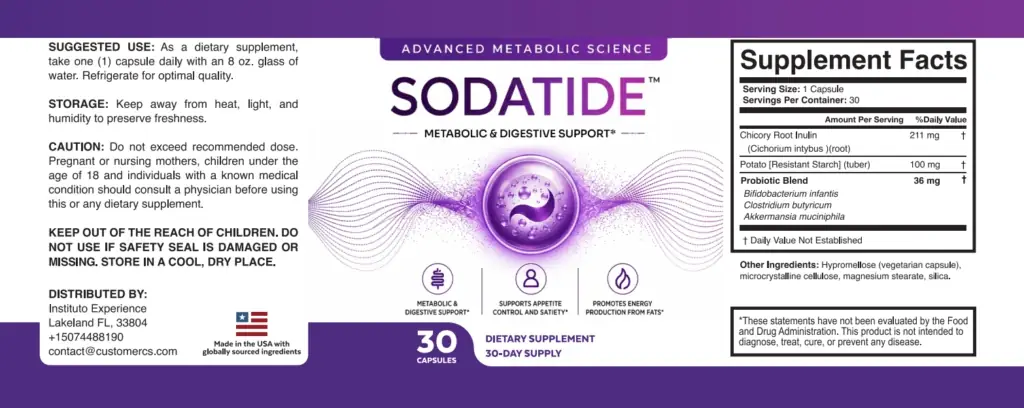
The most informative document available for this product, and the reason this site can publish figures the sales page leaves out entirely.
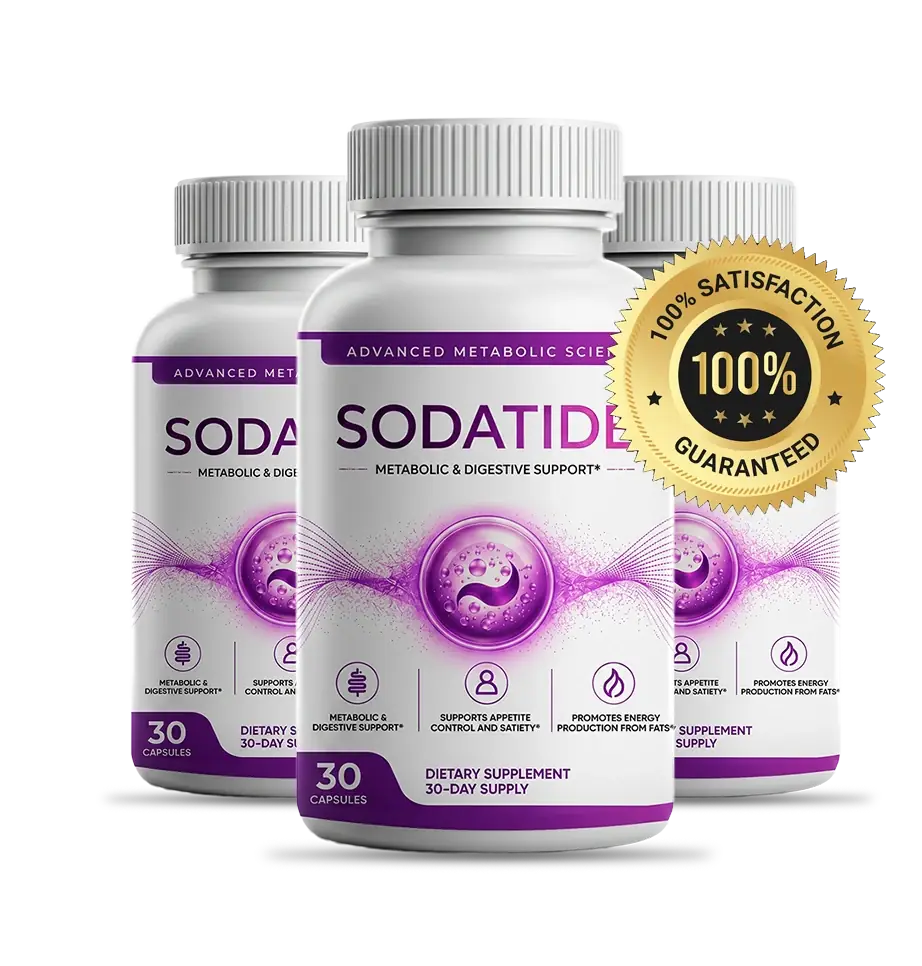
What the panel establishes: serving size one capsule; 30 servings per container; chicory root inulin (Cichorium intybus, root) 211 mg; potato resistant starch (tuber) 100 mg; probiotic blend 36 mg comprising Bifidobacterium infantis, Clostridium butyricum and Akkermansia muciniphila; daily value not established for any of the three. Other ingredients: hypromellose (vegetarian capsule), microcrystalline cellulose, magnesium stearate and silica. Suggested use: one capsule daily with an 8 oz glass of water, refrigerate for optimal quality. Distributed by Instituto Experience, Lakeland FL; made in the USA with globally sourced ingredients.
The sales page asks you to take the formula on trust. The label lets you check it.
The seller's page names three ingredients and describes a three-strain probiotic blend. It publishes no amount for any of them, anywhere — no milligrams, no CFU count — and it names only one of the three strains.
The product label publishes nearly all of it. The Supplement Facts panel on the bottle carries the milligram amounts and names all three strains. Read directly from the label:
The three strains, also named in full on the label: Bifidobacterium infantis, Clostridium butyricum and Akkermansia muciniphila. The sales page names only the third.
Why this matters. Without amounts, a named ingredient list cannot be checked against anything. With them, the comparison is simple arithmetic: 211 mg of inulin is roughly one twenty-fifth to one fiftieth of a studied prebiotic dose, and 100 mg of resistant starch is roughly one hundred-and- fiftieth to one three-hundredth of one.
That is not concealment — the numbers are printed on the bottle, and anyone can read them. It is a physical constraint: fibre is bulky, and a single small capsule cannot hold a gram-scale dose of it. Anyone eating a bowl of oats, a pear or a serving of beans takes in several grams of fermentable fibre. It is the fact that matters most when judging what one capsule a day can realistically do.
The label declares the probiotic blend by weight — 36 mg. That is the one figure on the panel that cannot be interpreted.
Probiotics are dosed in colony forming units, not milligrams. A CFU count measures how many live organisms you actually swallow. A weight tells you how much powder is in the capsule, and that powder is mostly carrier material. Two products both declaring 36 mg could differ by several orders of magnitude in live organisms, and nothing published distinguishes them.
Typical probiotic research uses doses in the region of one to fifty billion CFU a day, and trials report the figure because it is the variable that matters.
What this means practically: the strains are named, which is better than most blends manage, but the amount of live culture cannot be established from any published source. That is a fair question to put to the seller before ordering six months' worth.
Everything below is read from the product label or stated by the seller.
The problem the product aims at is real, even where the dose is small.
Common guidance puts adult fibre intake somewhere around 25 to 38 grams a day depending on age and sex. Typical intake in many countries is roughly half that.
That shortfall genuinely does affect digestion, regularity, satiety and the shape of the blood-sugar curve after eating — the exact list SodaTide is sold against. So the target is well chosen.
The honest complication is scale. A cup of cooked beans supplies something like 12 to 15 grams of fibre. A pear with the skin on, about 5. This capsule supplies 311 mg of fibre in total. It is not a substitute for food, and no capsule is.
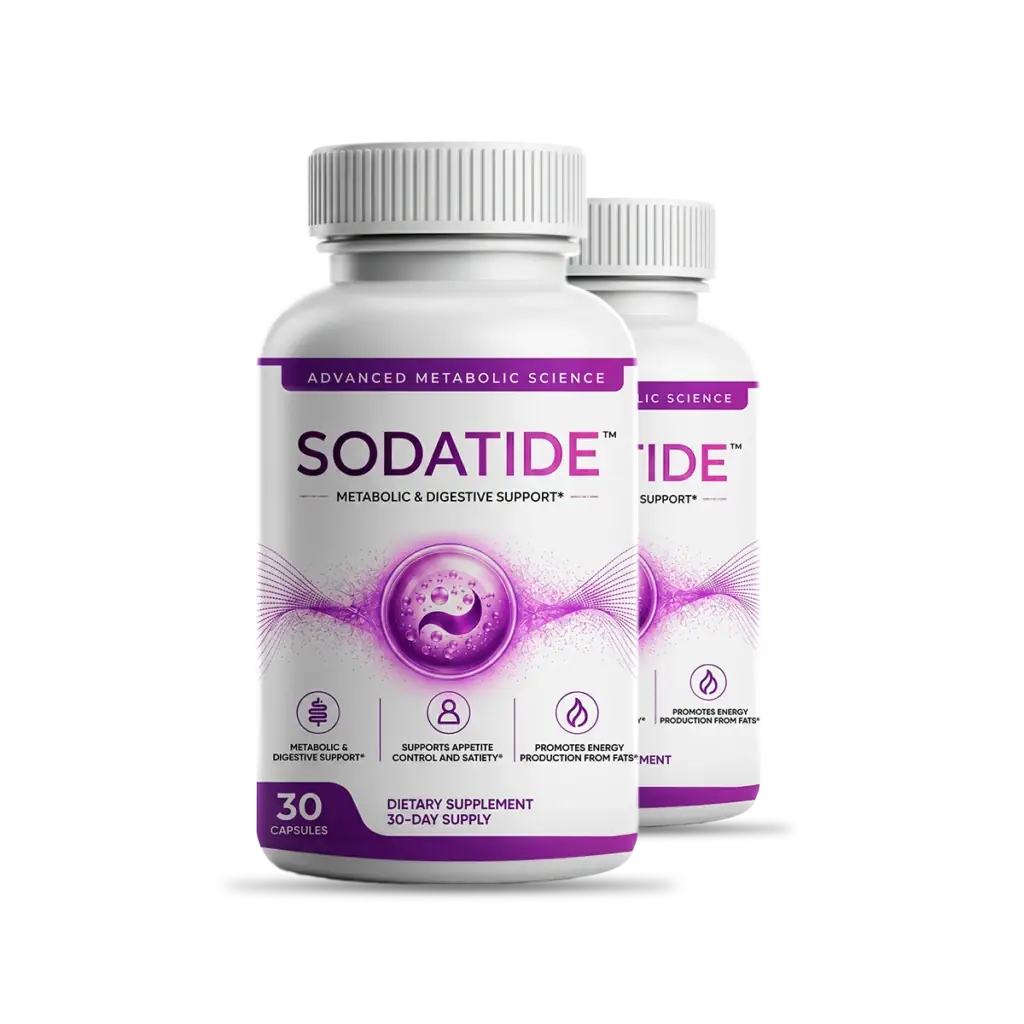
SodaTide is a once-daily vegetarian capsule sold as support for digestive and metabolic wellness. One capsule, thirty to a bottle, taken with a glass of water.
The underlying approach is narrower and more specific than most products in this aisle, and it is worth stating fairly: instead of stimulants or appetite suppressants, it feeds the bacteria already in your colon and adds three live strains of its own. Prebiotic fibre plus probiotics is a recognised combination, sometimes called a synbiotic.
That is a more defensible starting point than a thermogenic diet pill. The question this site answers is whether the amounts on the label can deliver it — and the label, unlike the sales page, lets us check.
What the label declares
The seller's page names three ingredients and describes a three-strain blend. It publishes no amount for any of them — no milligrams, no CFU count — and names only one of the three strains.
Without amounts, an ingredient list cannot be checked against anything. Any product can contain a trace of a well-researched ingredient and describe it in the same words a researched dose would earn.
The label closes most of that gap. Its Supplement Facts panel carries the milligram figures and names all three strains, which turns an unanswerable question into simple arithmetic against the published research.
One capsule, once a day, with a full glass of water. The seller suggests the morning, before eating, so the fibre is in place ahead of the day's meals. The label adds one more instruction that is easy to miss: refrigerate for optimal quality.
There is nothing to measure and no schedule to follow, which matters for a product whose own rationale is that microbiome change takes weeks. The most common reason supplements do nothing is that people stop taking them.
Plan the refrigeration before you order. Six bottles is 180 days of fridge space, shipping is not refrigerated, and a capsule you must keep cold is harder to take consistently when you travel.
Three components, each with the amount the label declares and a page of its own.
The largest single component of the capsule, and one of the best-characterised prebiotic fibres there is — studied at amounts roughly twenty-five to fifty times larger.
Learn more
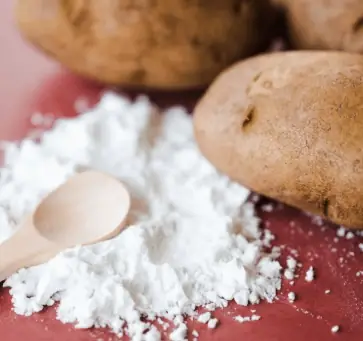
A starch that escapes digestion and ferments further along the colon than inulin — and the ingredient with the widest gap between label amount and research amount.
Learn more
Three strains named in full on the label, including one of the most interesting organisms in metabolic research — with no CFU count anywhere.
Learn moreThe underlying mechanism is coherent. Here it is, with the caveats attached.
Inulin and resistant starch both resist digestion in the small intestine and arrive in the colon still whole, where resident bacteria ferment them. This is well-established physiology, not a marketing construct.
Chiefly butyrate, propionate and acetate. Butyrate is the primary fuel for the cells lining the colon, and short-chain fatty acids are linked in research with the gut hormones GLP-1 and PYY, which are involved in fullness signalling.
The caveat: that research used gram-scale fibre doses. 311 mg of combined fibre produces correspondingly little fermentation.
This is the most thoughtful part of the formula. Inulin ferments early and briskly; resistant starch ferments later and further along the colon. Pairing them spreads the feeding rather than concentrating it — a real formulation decision.
That is the synbiotic idea, and it is sound in principle. The three strains are named on the label — Bifidobacterium infantis, Clostridium butyricum and Akkermansia muciniphila.
The caveat: no CFU count is published, so how many live organisms arrive is unknown.
Every step above is real biology. What none of it establishes is that 347 mg once a day is enough to move any of it measurably. The finished capsule has never been through a clinical trial, and the ingredient research was conducted at doses ten to three hundred times larger.
The seller's language goes considerably further than this — it describes the formula as attacking harmful bacteria and turning the gut into a fat-burning machine. Nothing published supports that for this amount.
The ingredient categories here are genuinely researched. Inulin is one of the best-characterised prebiotics there is; resistant starch has reasonable evidence for insulin sensitivity; and Akkermansia muciniphila is among the most actively studied organisms in metabolic research.
Two things follow that the seller's page does not say. That research concerns the ingredient categories, not this finished product, which has never been through a clinical trial of its own. And the research was conducted at grams per day of fibre, against 347 mg of total active material here.
The research explains why these ingredients are interesting. It does not show that this capsule reproduces the results.
Three things genuinely in the product's favour, and three worth knowing before you buy.
Most probiotic blends name none, and this seller's page names one. The label names all three, including Akkermansia muciniphila — better disclosure than the category norm.
Two fibres that ferment at different rates, paired with a butyrate producer and a barrier-associated organism. That is a coherent design rather than a list assembled for a label.
The seller states plainly that its badges indicate facility standards only and that the brand is not endorsed by any government body. More pages should say that.
211 mg and 100 mg against research conducted at 5–10 g and 15–30 g a day. That gap is the single most important fact here.
The probiotic blend is declared by weight. Weight cannot tell you how many live organisms you are getting, and nothing published closes that gap.
Fat-burning language, an unverifiable rating, an unnamed expert, a countdown timer and a stock counter. None of it is reproduced here.
Four claims stated exactly as the label and the seller state them.
The badge is worded accurately: registered facility, not approved product. Registration is a listing requirement for the plant.
Good Manufacturing Practice governs cleanliness, records and batch control. It concerns the plant and the process, not the formula.
The label's fuller wording is “made in the USA with globally sourced ingredients” — manufacturing is domestic, raw materials are not necessarily.
This is the seller's own claim rather than a third-party certification, and no certifying body is named.
None of these is a statement about whether the formula works. They describe where and how it is made — which is exactly what the seller's own footer says about them.
Carried forward, because they are supportable or verifiable: the three named ingredients; the once-daily vegetarian, lactose-free capsule; the refrigeration instruction; US manufacture in an FDA-registered, GMP-certified facility; the three bundle prices and shipping terms; the 60-day guarantee and its 30-day minimum use period; the one-time purchase with no auto-billing; the six bonus guides; and the seller's own footer disclaimer, which is a good one.
Not carried forward:
The seller's own footer already concedes much of the ground: it describes the page as an advertising publication rather than an editorial or medical column, and notes that testimonials may not represent typical results.
The seller's page runs a comparison table setting the product against “Injectables & Rx Plans”, marking prescription options with crosses for side effects, rebound weight and no refund, and noting that they require injections and office visits. The body copy adds that prescription weight-loss options “often involve side effects and ongoing medical visits” and are difficult to maintain.
Some of that is factually unremarkable — a capsule is obviously easier than an injection. But the framing invites a comparison that should not be made.
Prescription weight-loss medicines and a 347 mg fibre-and-probiotic capsule are not alternatives to one another. They are not in the same category, they have not been compared in any trial, and one has regulatory approval and clinical evidence behind it while the other has neither.
Never stop, delay or replace a prescribed treatment on the strength of a supplement page. That applies with particular force to anyone managing type 2 diabetes, where medication changes belong to a doctor and nobody else. If you are weighing up prescription options, that is a conversation with a clinician who knows your history — not a decision to be made from a sales table.
The seller's page displays 4.9 out of 5 from 3,962 verified buyers, repeated in several places, alongside three named testimonials with portraits and “Verified Purchase” labels.
No review platform is named or linked anywhere. The rating and the count sit on the seller's own page, which means there is nowhere to read the reviews independently, no way to verify the count, and no way to see unfavourable ones. On a marketplace, “verified purchase” means something specific and checkable. On a seller's own page it means whatever the seller intends it to mean.
So no star rating, review count, customer name, location, portrait or testimonial quotation appears anywhere on this site, and no rating appears in its structured data. Nothing has been invented in their place either.
One of the three testimonials deserves specific mention. It is attributed to a diabetic describing improved blood sugar management and calls the product a game-changer. That is a disease-management claim, and a dietary supplement page should not carry one regardless of who is quoted as making it.
The seller's page carries a 30-minute countdown timer labelled “Today's Discount Expires In”, a warning that “only 37 bottles remain at today's price”, the heading “While Supplies Last”, and the claim that 96% of customers choose the six-bottle kit.
None of it appears on this site. A countdown that resets when you reload the page is not a deadline, and a stock counter on a page selling a manufactured supplement is not an inventory figure. Their function is to compress the time you spend thinking.
What can honestly be said is that promotional pricing may change at any time, and that the official checkout is the only authoritative source for what an order costs today. That is the whole of it.
No dietary supplement is. The seller describes production in an FDA-registered US facility, which is accurate as far as it goes, and its trust badges are labelled “FDA Registered” rather than approved.
Credit where it is due: the footer of the seller's page states plainly that the brand is not affiliated with or endorsed by the FDA, GMP, USDA or any government body referenced in trust badges, and that these badges indicate manufacturing facility standards only. That is exactly right, and more than most pages say.
Facility registration is a listing requirement for the plant where a product is made. It is not an evaluation, an endorsement or approval of anything made there. The badge used on this site is worded accurately — it reads “FDA Registered Facility”.
The same applies to GMP. Good Manufacturing Practice concerns how a facility is run — cleanliness, record keeping, batch control. It is meaningful and worth having, and it says nothing about whether a formula works.
Microbiome change is gradual. Fibre and probiotic trials usually run four to twelve weeks before measuring anything, and the seller is right to ask you to judge the product over weeks rather than days.
Hold that against the label. 347 mg of total active material, against research conducted at gram-per-day doses. A realistic expectation is that you may notice some digestive change in the first week — most likely gas, as any fibre supplement produces — and comparatively little beyond that.
What to do instead of hoping: decide in advance what you would actually notice, note where it stands before you start, change one thing at a time, and diarise both guarantee dates — day 30, when you may request a refund, and day 60, when the right expires.
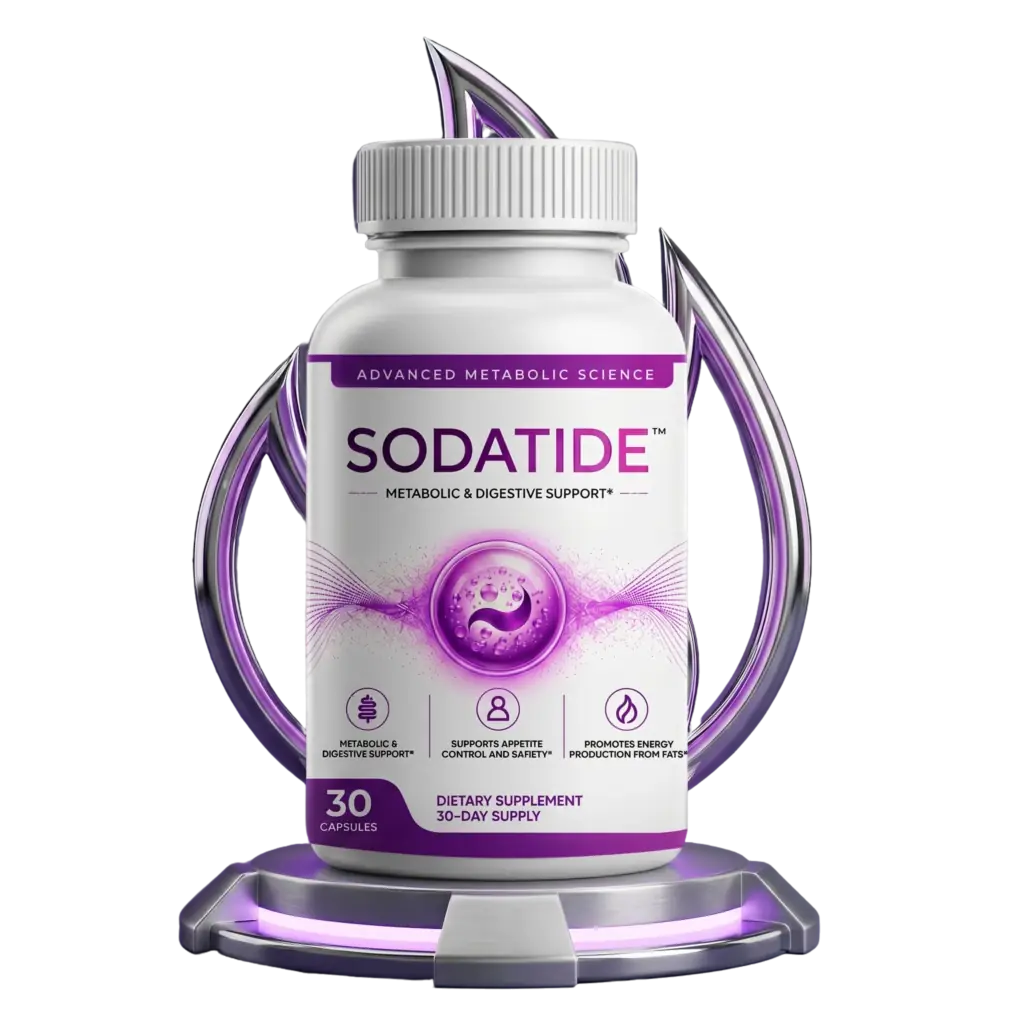
The label says: take one capsule daily with an 8 oz glass of water, and refrigerate for optimal quality.
The seller adds: preferably in the morning, before a meal, and refrigerate after opening to preserve the potency of the probiotics.
These agree on everything that matters. The only difference worth noting is the refrigeration wording: the label asks for refrigeration generally, while the seller frames it as after opening. If in doubt, follow the label — it is the more conservative instruction and the legally controlling one.
The label says “Refrigerate for optimal quality” and to keep the bottle away from heat, light and humidity. The seller repeats the instruction and explains it correctly: live probiotic organisms lose potency when warm.
Credit where it is due. Asking buyers to refrigerate is a live-culture instruction rather than a marketing flourish, and it is a point in the product's favour that it is stated at all — plenty of probiotic products quietly skip it.
The practical consequences are worth thinking about before you buy:
The label's own caution is the right starting point: do not exceed the recommended dose, and pregnant or nursing mothers, children under 18 and anyone with a known medical condition should consult a physician before using this or any dietary supplement. The seller says the same.
SodaTide is a dietary supplement, not a medicine, and is not intended to diagnose, treat, cure or prevent any disease.
SodaTide is a dietary supplement, not a treatment for any medical condition. It is not a treatment for obesity, diabetes, irritable bowel syndrome, inflammatory bowel disease or any other condition, and it is not intended to diagnose, treat, cure or prevent any disease.
Some symptoms need a doctor rather than a supplement, and this is worth being specific about. Sudden or unexplained weight loss, persistent abdominal pain, blood in the stool, a lasting change in bowel habit, or difficulty swallowing all need clinical assessment. So does persistent fatigue, which has causes a blood test can find — anaemia, thyroid disease, coeliac disease, diabetes and sleep apnoea among them.
A prebiotic capsule cannot distinguish between ordinary bloating and something that needs investigating. A doctor can.
There is an unusually direct comparison available for this product, and it would be dishonest to leave it out.
Most adults eat far less fibre than recommended. Common guidance is somewhere around 25–38 grams a day depending on age and sex, and typical intake in many countries is roughly half that. That shortfall is the single biggest lever on exactly the things this product is sold for: digestion, regularity, satiety and post-meal blood sugar.
For scale: a cup of cooked beans or lentils supplies somewhere in the region of 12–15 grams of fibre. A pear with the skin on, around 5 grams. A bowl of oats, roughly 4 grams. A cooled cooked potato — the very source this product's resistant starch comes from — supplies resistant starch in grams.
Against those figures, 311 mg of combined fibre is a rounding error. That is not an argument that the capsule is worthless; a probiotic dose is a different proposition from a fibre dose. It is an argument that no capsule substitutes for food, and that anyone buying this for digestive benefit will get far more from adding beans, oats, fruit and vegetables than from anything in a 347 mg capsule.
Sleep, movement and total diet do the heavy lifting.
The three bundles the seller lists, with one printed figure corrected and the correction explained.
$358 → $158 total
Seller states a saving of $200
The seller prints the struck price here as $179. Its own regular rate is $179 per bottle, and only $358 gives the $200 saving it claims — see the note below.
$1074 → $294 total
Seller states a saving of $780
$537 → $207 total
Seller states a saving of $330
About that two-bottle
figure. The seller's page shows the two-bottle tier as a struck
$179 reduced to $158, while also claiming a $200 saving. Those two numbers cannot
both be right: $179 minus $158 is $21. The intended figure is
$358 — the page's own regular rate is $179 per bottle, and
$358 minus $158 is exactly the $200 claimed. The other two tiers confirm the pattern and
reconcile perfectly ($179×3 = $537 struck, less $207, saves $330; $179×6 = $1074
struck, less $294, saves $780). $358 is shown above rather than the printed $179,
because repeating the printed figure would pass on an error. Free US shipping
applies to the three- and six-bottle bundles only; the two-bottle bundle adds a shipping fee
at checkout and is the only tier without the six digital bonuses. These are current listed
offers rather than permanent prices, and the official checkout is the only authoritative
source.
The seller states a 60-day satisfaction guarantee from the date of purchase and describes it as unconditional. It also states the purchase is one-time with no automatic renewals or auto-billing, which is a genuine point in its favour.
The same page says twice that a refund follows “at least 30 days of use”. Read together with the 60-day limit, the practical window to request a refund is days 30 to 60 — about 30 days wide, not 60.
That is not unreasonable for a product whose own rationale is that microbiome change takes weeks. But “unconditional” is not quite the right word for a guarantee with a stated precondition, and the gap is easy to miss.
Only the two-bottle bundle is a 60-day supply and fits inside the guarantee at all. The three-bottle bundle runs 90 days and the six-bottle bundle 180 days — three times longer than the window.
Put day 30 and day 60 in your calendar the day you order. The stated refund contact is [email protected]. Two things the published terms do not settle: who pays return postage, and whether opened bottles are accepted.
Fifteen straight answers, including the amounts the sales page never gives.
SodaTide is a once-daily vegetarian capsule sold as support for digestive and metabolic wellness. It pairs two prebiotic fibres with a three-strain probiotic blend. Thirty capsules per bottle, a 30-day supply.
Read from the product label: chicory root inulin 211 mg, potato resistant starch 100 mg, and a probiotic blend of 36 mg containing Bifidobacterium infantis, Clostridium butyricum and Akkermansia muciniphila. Total active material is 347 mg. Full breakdown here.
Because the label publishes them. The seller's page names the three ingredients but gives no milligram amount for any of them and no CFU count, and names only one of the three strains. The Supplement Facts panel on the bottle carries the amounts and names all three.
Not much, and this is the key fact. Prebiotic inulin trials typically use 5–10 grams a day; resistant starch studies typically use 15–30 grams. This capsule has 211 mg and 100 mg. Fibre is bulky, and no single small capsule can hold a gram-scale dose.
Not published anywhere, including on the label. The blend is declared by weight (36 mg), and weight cannot be converted to colony forming units.
The label says one capsule daily with an 8 oz glass of water. The seller adds that the morning, before a meal, is preferable. One capsule a day, thirty per bottle.
Yes — the label says “Refrigerate for optimal quality.” Live probiotic organisms lose potency in heat. Worth planning for: a six-bottle bundle is 180 days of fridge space, and shipping is not refrigerated.
Yes. The capsule shell is hypromellose, a plant-derived material, and the seller describes the product as vegetarian and lactose-free.
Three: two bottles at $79 each ($158), three at $69 each ($207), and six at $49 each ($294). Free US shipping applies to the three- and six-bottle bundles only.
Because the seller's printed figure contains an error. It shows a struck $179 reduced to $158 while claiming a $200 saving, but $179 minus $158 is $21. Its own regular rate is $179 per bottle, so the struck total should read $358, which gives exactly the $200 claimed. Full explanation here.
60 days from purchase, described by the seller as unconditional. But the same page says a refund follows at least 30 days of use, so the practical window to act is days 30 to 60. The stated refund contact is [email protected].
No, and no dietary supplement is. It is made in an FDA-registered facility, and registration applies to the facility rather than the product. The seller's own footer says the brand is not affiliated with or endorsed by the FDA, and that the badges indicate facility standards only.
No. Individual results may vary. SodaTide has not been through a clinical trial of its own, and the research behind its ingredient categories concerns those categories rather than this capsule.
Possibly, in the first week. That is the normal response to any prebiotic fibre as gut bacteria adjust. If you have IBS or follow a low-FODMAP diet, note that inulin is a fructan.
No, and this matters. A 347 mg fibre-and-probiotic capsule and a prescription medicine are not alternatives to one another and have never been compared in any trial. Never stop or replace prescribed medication on the strength of a supplement page — that is a conversation for your doctor.
Read the ingredients page first. This site publishes the per-capsule amounts and all three probiotic strain names, read directly from the product label — none of which appears on the seller's page at all. They are the numbers that should shape the decision.
From $49 per bottle · 60-day money-back guarantee · One capsule a day